
5 Everyday Habits That May Affect Your Heart Health – And How to Improve Them
5 Everyday Habits That May Affect Your Heart Health – And How to Improve Them Your heart works around the clock, but are your daily habits supporting it? When w…
5 Everyday Habits That May Affect Your Heart Health – And How to Improve Them
Your heart works around the clock, but are your daily habits supporting it?
When we think about heart health, we often focus on cholesterol levels, blood pressure readings, medical checkups, and exercise. However, our everyday lifestyle choices also play an important role in maintaining a healthy heart.
From spending hours sitting at a desk to managing daily stress and eating habits, small routines can influence our cardiovascular health over time.
Let's explore five common habits that deserve more attention and discover simple ways to build a healthier lifestyle.
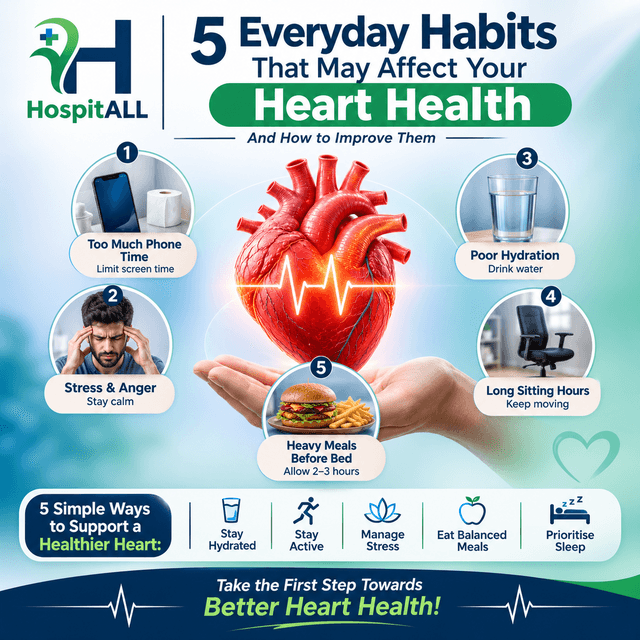
1. Spending Too Much Time on Your Phone 📱
Taking your phone everywhere, even into the bathroom, has become a common habit.
Although scrolling itself is not a proven direct cause of heart attacks, excessive screen time can contribute to a sedentary lifestyle, poor sleep, and increased stress.
How to improve it:
- Limit unnecessary screen time.
- Avoid using your phone immediately before bedtime.
- Take regular breaks from screens.
- Make time for physical activity throughout the day.
2. Ignoring Stress and Anger 😡
Daily stress, frustration, and frequent emotional outbursts can affect your body.
Stress activates the body's natural fight-or-flight response, temporarily increasing heart rate and blood pressure. Chronic stress may also contribute to unhealthy behaviours that affect heart health.
How to improve it:
- Practise deep breathing.
- Take short breaks during stressful situations.
- Try meditation or relaxation exercises.
- Maintain healthy communication and emotional balance.
3. Neglecting Proper Hydration 💧
Water plays an essential role in maintaining normal body functions, including circulation.
Not drinking enough water can lead to dehydration, which may affect blood volume and overall well-being.
How to improve it:
- Drink water regularly throughout the day.
- Start your morning with a glass of water if you feel thirsty.
- Increase fluid intake when exercising or in hot weather.
- Avoid relying only on caffeinated drinks for hydration.
4. Sitting for Long Hours Without Movement 🪑
Whether you're working in an office, studying, driving, or watching television, sitting for extended periods can negatively affect your health.
A sedentary lifestyle is associated with an increased risk of cardiovascular disease and other health conditions.
How to improve it:
- Stand up and move around regularly.
- Take short walking breaks during work.
- Use stairs whenever practical.
- Include daily walking or other physical activities in your routine.
5. Eating Heavy Meals Before Bedtime 🍽️
Late-night heavy meals can affect digestion and sleep quality.
Eating close to bedtime may also worsen acid reflux, causing discomfort when lying down. Importantly, symptoms of acid reflux can sometimes resemble heart-related discomfort.
How to improve it:
- Choose balanced and lighter evening meals.
- Avoid overeating before bedtime.
- Allow around 2–3 hours between your last meal and lying down, particularly if you experience acid reflux.
- Reduce foods that trigger your digestive symptoms.
5 Simple Ways to Support a Healthier Heart ❤️
Building better habits doesn't have to be complicated. Start with these simple lifestyle changes:
- Stay hydrated: Drink enough water throughout the day.
- Stay active: Make walking and regular exercise part of your routine.
- Manage stress: Give your mind time to relax.
- Eat balanced meals: Include fruits, vegetables, and fibre-rich foods.
- Prioritise sleep: Maintain a consistent and healthy sleep schedule.
Also, monitor your blood pressure, cholesterol, and blood sugar levels, and consult your healthcare provider about your individual cardiovascular risk.
Know the Warning Signs of a Heart Attack 🚨
Heart attacks do not always present in the same way. Chest discomfort is common, but symptoms can also include:
- Pain or discomfort in the arms, back, neck, jaw, or stomach.
- Shortness of breath.
- Cold sweating.
- Nausea or vomiting.
- Unusual tiredness or dizziness.
Never ignore possible heart attack symptoms. Seek emergency medical assistance immediately, even if you are unsure whether the symptoms are heart-related.
Your Heart Deserves Daily Care!
Heart health is not just about what happens during a medical checkup. It is also about the choices we make every day. Start with small changes, stay physically active, manage stress, and pay attention to your body's needs.
A healthier lifestyle today can support a healthier heart tomorrow.
Take the First Step Towards Better Heart Health!
At HospitALL, we believe that awareness and prevention are important steps towards a healthier life.
Medical Disclaimer: This article is intended for general educational and awareness purposes only. It does not replace professional medical advice, diagnosis, or treatment. Consult a qualified healthcare professional for personalised guidance. If you experience symptoms of a heart attack, seek emergency medical assistance immediately.